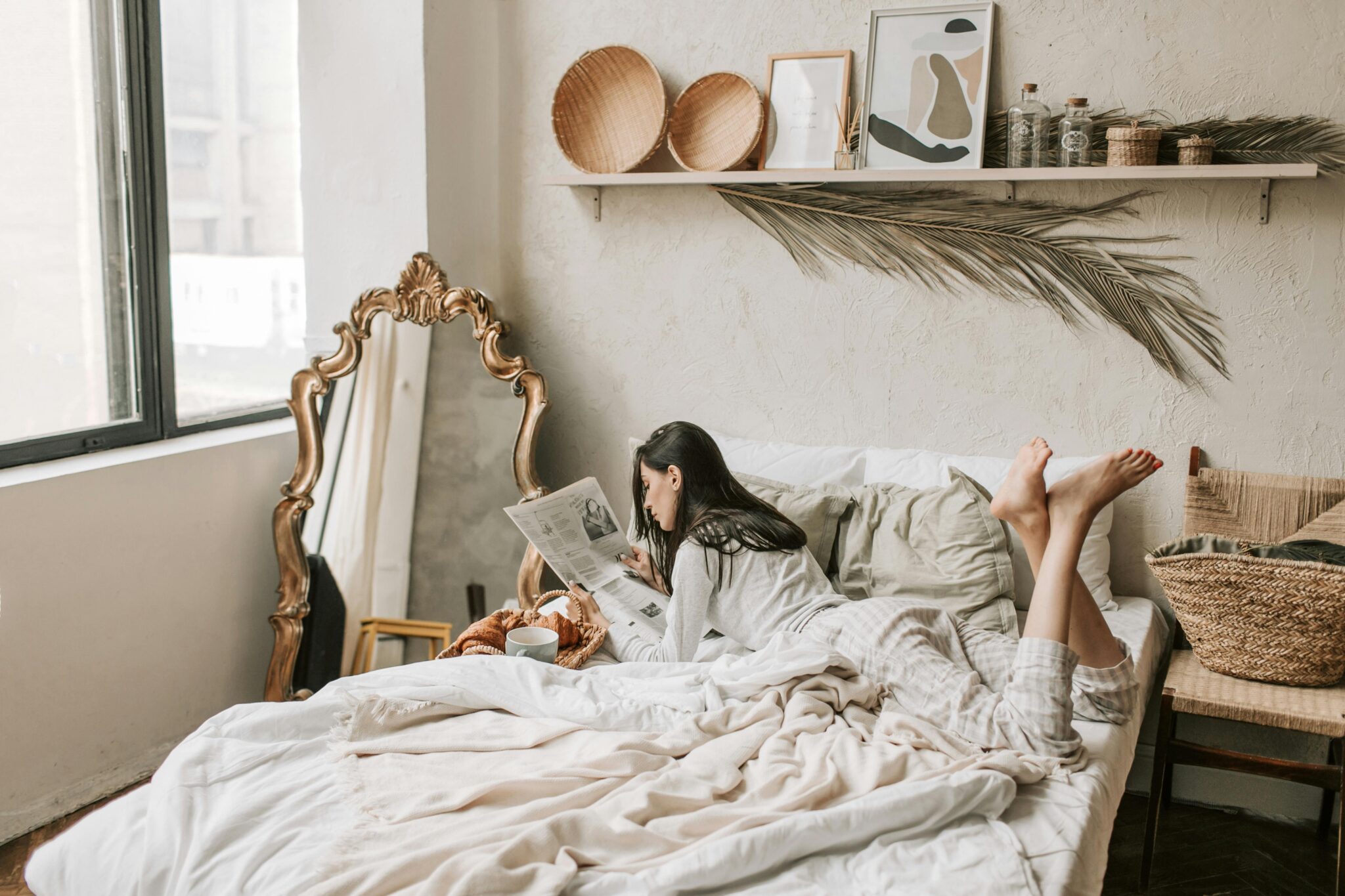
A room can have good furniture and attractive colors yet still feel strangely flat. The missing element is often texture rather than decoration. Wood grain, woven fabric, linen, stone, ceramics, plants, rugs, and subtle surface differences give the eye more to notice without filling the room with extra objects. Depth comes from contrast between surfaces, not sheer quantity.
Start With the Largest Soft Surfaces
Rugs, curtains, bedding, and upholstered furniture cover substantial visual areas, so changing texture there makes a bigger difference than adding several small accessories.
A tightly woven rug beside a soft sofa, for example, creates contrast even when both are similar in color. Studying layered interior design can provide ideas for combining finishes while keeping the palette restrained.
Use Similar Colors With Different Finishes
Texture becomes especially useful in neutral rooms. Beige linen, cream wool, light oak, and off-white ceramic may share a quiet palette while still looking distinct.
This allows the room to gain depth without introducing strong color simply for visual interest.
Layer Fabrics Instead of Adding Objects
A throw draped over a chair or two cushions in different fabrics can change how a seating area feels. Velvet, cotton, boucle, linen, and knitted textiles each reflect light differently.
The key is restraint. Inspiration from soft home environments can help when combining fabrics that feel comfortable without turning every sofa, bed, and chair into a pile of layered accessories.
| Surface | Texture Idea | Visual Effect |
|---|---|---|
| Sofa | Linen or woven throw | Soft contrast |
| Floor | Wool or jute rug | Added warmth |
| Table | Wood or stone | Natural variation |
| Wall | Matte artwork | Quiet depth |
Bring in Natural Materials
Natural materials often have enough variation to create texture without extra decoration. Wood grain, stone veining, woven baskets, terracotta, and living plants all introduce irregular surfaces.
Outdoor environments demonstrate this especially well. Exterior living inspiration often combines stone, timber, water, greenery, and fabric, and the same idea can be scaled down indoors with a wooden bowl, ceramic planter, woven shade, or small leafy plant.
Don’t Force Every Material Into One Room
Using every available texture can turn subtle layering into visual clutter. Pick a few materials that suit the existing style.
A contemporary space might combine smooth metal, wool, wood, and glass. A warmer traditional room may work better with linen, aged wood, ceramics, and woven fibers.
Create Contrast Around Hard Furniture
Rooms containing many flat, hard surfaces often benefit most from softness. A glass table beside a leather sofa and smooth cabinet can feel cold if every surface reflects light in a similar way.
Introduce a textured rug beneath the table or fabric curtains behind the seating. Contrast becomes more noticeable when opposing finishes sit close to one another.
Why More Texture Can Become More Clutter
Texture isn’t automatically subtle. Tassels, fringe, heavy patterns, carved objects, thick knits, woven baskets, and rough finishes can collectively create as much visual noise as excessive decoration.
Avoid treating texture like a checklist. If the room already has strong wood grain, patterned upholstery, and a textured rug, it may need smooth surfaces for balance. Depth depends on contrast. Without calm areas, textured features lose their effect.
Frequently Asked Questions
Can a neutral room have enough visual depth without color?
Yes. Different materials, fabric weaves, wood grains, matte finishes, and reflective surfaces can create strong visual variation within a restrained palette.
What is the easiest texture to add to a living room?
A rug or throw is usually one of the simplest choices because it covers enough visual area to change the room without requiring permanent alterations.
Should every piece of furniture have a different texture?
No. Repetition creates cohesion. Use a limited group of textures across several pieces while allowing some smooth surfaces to provide visual rest.
Add Depth, Not More Stuff
When a room feels flat, buying another decorative object should rarely be the first move. Look at the surfaces already present and introduce contrast where everything feels too similar. A woven fabric beside smooth wood or a soft rug beneath hard furniture may be enough. Good texture works quietly, giving the room dimension while keeping its surfaces, shelves, and walkways comfortably uncluttered.