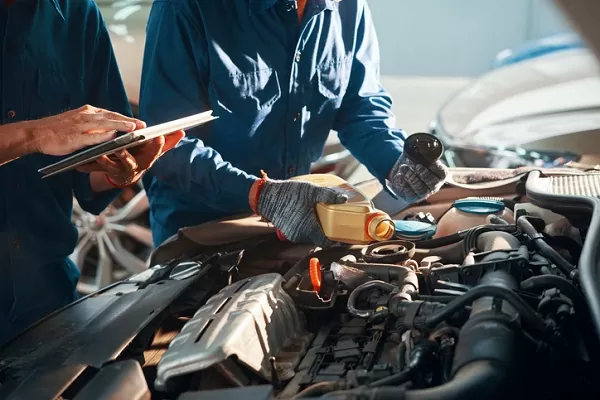
An engine that repeatedly needs oil between normal service intervals may be leaking it, burning it, or losing it through another mechanical problem. Excessive oil consumption should be tracked rather than handled with endless top-offs. If the level is allowed to fall too far, lubrication problems can create additional wear that makes the original issue more expensive.
Confirm How Much Oil the Engine Is Actually Using
Begin with consistent measurements. Park on level ground, check the oil according to the manufacturer’s instructions, and record the mileage whenever oil is added.
General engine performance reading can help owners understand maintenance patterns, but your own records are especially useful here. They reveal whether oil loss is stable, becoming faster, or linked to certain driving conditions.
Check for External Leaks First
Inspect the parking area and visible engine surfaces for fresh oil. Common leak points can include valve-cover gaskets, oil-pan sealing surfaces, crankshaft seals, filter housings, drain plugs, and other engine-specific areas.
Some leaks occur mainly while the engine is running, so a clean driveway doesn’t completely rule them out.
Look for Signs the Engine Is Burning Oil
Oil can enter the combustion chambers through worn piston rings, cylinder wear, valve-stem seals, turbocharger problems on equipped vehicles, or other internal faults. Blue or bluish exhaust smoke can be a clue, although modern emissions systems may make visible smoke less obvious.
Owners reviewing oil-use troubleshooting guides may encounter many possible causes. The key is connecting oil loss with compression, smoke, spark-plug condition, crankcase pressure, and other measurable evidence.
| Observation | Possible Direction | Useful Follow-Up |
|---|---|---|
| Oil spots under car | External leak | Inspect seals and gaskets |
| Blue exhaust smoke | Oil burning | Internal engine checks |
| Oily spark plug | Cylinder-specific issue | Compression/leak-down test |
| No visible leak or smoke | Hidden consumption | Track usage carefully |
Check the Crankcase Ventilation System
The positive crankcase ventilation system helps manage pressure and vapors inside the engine. A malfunction can affect oil movement, increase pressure, or contribute to oil entering the intake on some engine designs.
Broader vehicle service references can help explain how maintenance systems relate to engine health, but component testing should follow the specific vehicle design. A blocked hose or faulty valve is generally much cheaper to address than internal engine wear, so it shouldn’t be overlooked.
Testing Can Separate Several Similar Problems
Compression tests, leak-down testing, borescope inspection, spark-plug examination, and checks of the intake system can provide evidence about where oil is going. Not every engine needs every test.
The diagnostic path should follow the symptoms instead of beginning with the most expensive possibility.
Why Constantly Adding Oil Isn’t a Complete Fix
Keeping the level full is important, but top-offs alone don’t solve excessive consumption. A small leak can worsen, contaminated spark plugs can create misfires, and an engine burning significant oil may eventually affect emissions-related components.
The opposite mistake is assuming any oil use proves the engine needs rebuilding. Minor leaks, ventilation faults, maintenance errors, or engine-specific characteristics should be investigated before major repair decisions are made.
Frequently Asked Questions
Why is my engine losing oil without leaving spots?
The engine may be burning oil internally, leaking only while running, or losing small amounts that collect on underbody components rather than reaching the ground. Careful tracking and inspection can help locate the loss.
Can worn piston rings increase oil consumption?
Yes. Worn or stuck rings can allow more oil to reach the combustion chamber, where it burns with the air-fuel mixture. Compression, leak-down, and other tests may help evaluate internal engine condition.
Can the wrong engine oil increase consumption?
Using an oil viscosity or specification that doesn’t match manufacturer requirements can affect engine behavior and consumption in some situations. Always use the grade and specification recommended for the particular engine.
Track the Loss and Fix the Cause
Excessive oil consumption becomes easier to diagnose when you stop treating each top-off as an isolated event. Record mileage and oil additions, inspect for leaks, and watch for smoke or other changes. With a clear consumption pattern, testing can separate simple external or ventilation problems from internal wear before low oil creates further engine damage.