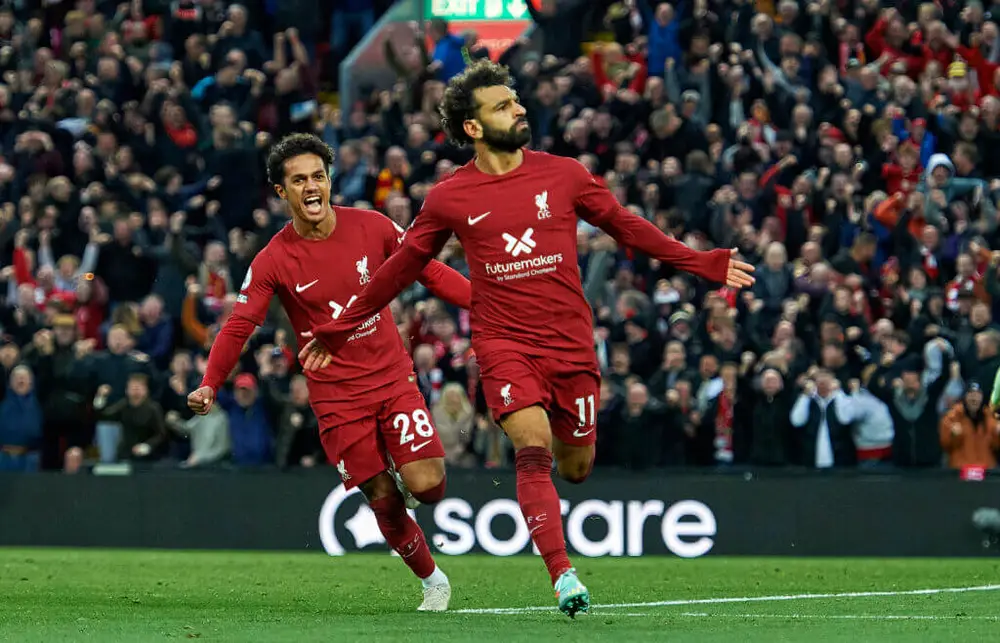
A strong counter attack begins in the first few seconds after possession changes. The defending team may be spread out, fullbacks may be advanced, and midfielders may be facing the wrong direction. Teams that recognize those moments quickly can attack space before the opponent rebuilds its defensive shape.
Speed of thought matters as much as running speed.
Make the First Pass Useful
The first pass after winning possession doesn’t always need to travel forward, but it should help the team escape pressure or attack available space.
A player recovering the ball should quickly check whether a forward option is open. If the central route is blocked, a sideways pass can still launch the counter by finding a teammate facing forward.
Studying team transition patterns can help players think beyond the tackle itself. Winning possession is only the beginning; the next action determines whether the transition becomes dangerous.
Protect the Ball Before Forcing the Attack
Not every regain creates a counter-attacking opportunity. If the ball is won under heavy pressure, securing possession may be smarter than attempting a low-percentage pass.
Recognizing that difference prevents unnecessary turnovers.
Run Into Different Spaces
Counter attacks become predictable when every attacking player runs straight toward goal. Better movement creates width, depth, and passing lanes.
One runner may stretch the defense centrally while another moves wide. A third player can arrive later around the edge of the area.
Looking at varied football match scenarios can help players recognize how quickly defensive shapes change after turnovers. Good runs attack the gaps created during that temporary disorder.
| Transition Situation | Useful Choice | Main Goal |
|---|---|---|
| Space behind defense | Early forward pass | Attack immediately |
| Central lane crowded | Release wide | Stretch defenders |
| Ball winner pressured | Secure first pass | Keep possession |
| Attack slows down | Support underneath | Avoid isolation |
Carry the Ball When Passing Lanes Are Closed
Passing isn’t always the fastest way forward. A player with open grass ahead may gain more ground by driving into space and forcing a defender to commit.
Once the defender steps out, a teammate can become free.
Footballers exploring transition tactics and movement can compare moments when an early pass is better with situations where carrying the ball attracts pressure first. The correct choice depends on the defenders’ positions.
Why Counters Often Collapse
Rushing every action can be as damaging as playing too slowly. Players sometimes confuse fast transition play with hitting the first forward pass they see.
Poor spacing creates another problem. If supporting attackers run into the same channel, the ball carrier loses passing options and defenders can protect one area.
Players also need to recognize when the counter is finished. If the opponent has recovered numbers, recycling possession may be better than forcing a shot or hopeful cross.
Train the Moment Possession Changes
Transition exercises should begin with realistic turnovers. Small-sided games can require the team winning possession to attack a target immediately while the other side attempts to recover its shape.
Coaches can encourage the first player to look forward while teammates react with explosive but intelligent movement.
Occasionally allowing the counter to continue without touch limits is useful. Players need to learn when to pass early, when to carry the ball, and when to slow the attack.
Frequently Asked Questions
How fast should a counter attack be?
It should exploit the temporary advantage before the opponent reorganizes, but speed shouldn’t replace judgment. The best counter attacks combine quick recognition, purposeful movement, and accurate execution rather than simply rushing forward.
Where should attackers run during a counter?
Attackers should usually occupy different lanes. Central runs can threaten behind defenders, wide runs stretch the back line, and supporting runs underneath provide safer passing options if the immediate route toward goal disappears.
When should a team stop counter attacking?
The counter may be over once defenders recover their shape and the numerical or positional advantage disappears. At that point, retaining possession and building another attack can be more productive than forcing a risky final action.
Attack the Space Before It Disappears
Counter attacks improve when players recognize the transition instantly and move with different purposes. Look forward after winning possession, support the ball carrier in separate lanes, and attack open space before defenders recover. But don’t force speed when the advantage has gone. The strongest transition teams know both when to accelerate and when to keep the ball.