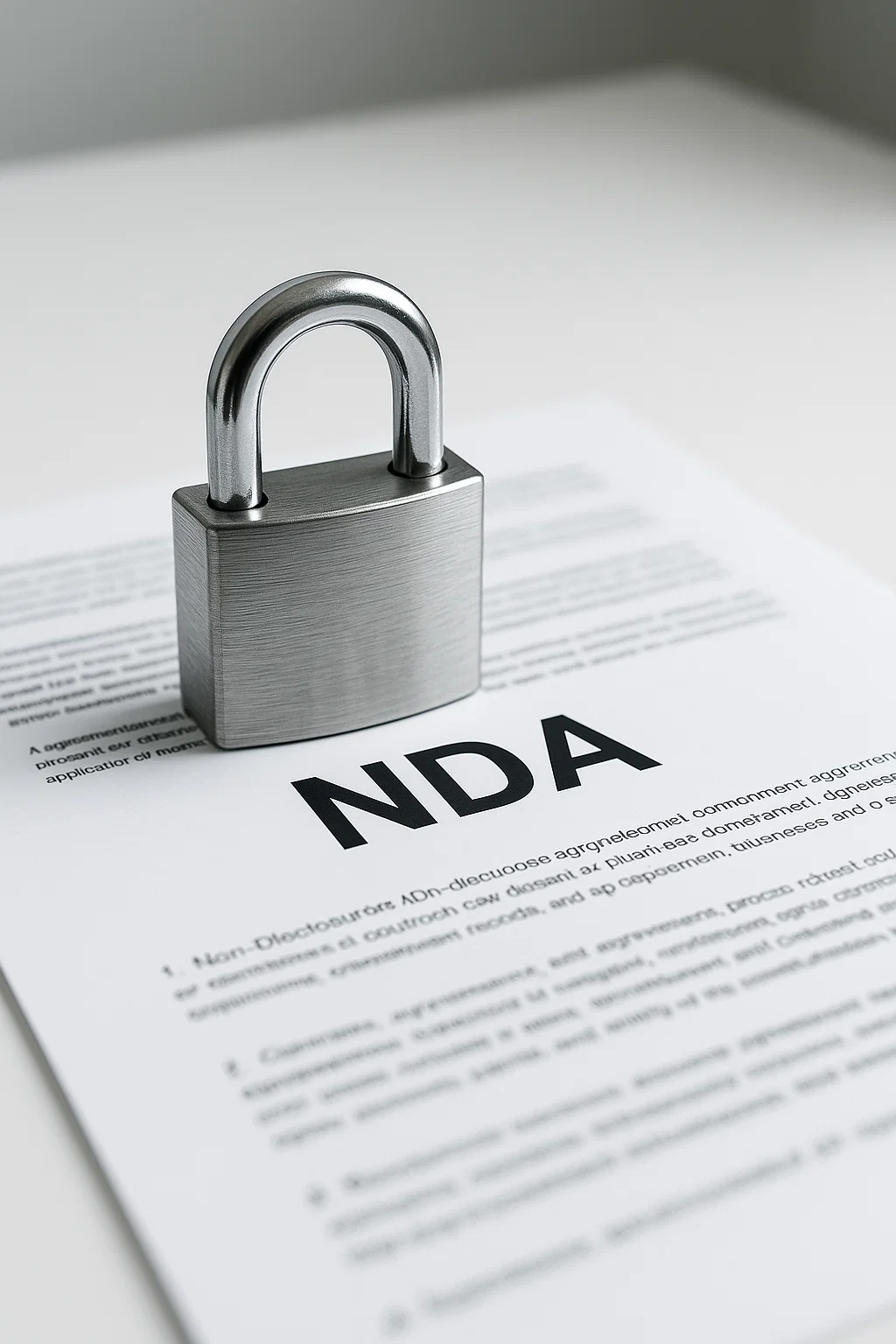
NDA enforcement questions should begin with the actual agreement, not with assumptions about what “confidential” means. A demand may be weakened if the agreement does not cover the information at issue, contains exceptions, has expired, conflicts with applicable law, or cannot be connected to a provable disclosure.
Reviewing scope first can prevent unnecessary threats and poorly framed claims.
Read the Definitions Before Alleging a Breach
Start with the agreement’s definition of confidential information. Some NDAs cover information broadly, while others protect only marked documents, specified categories, information disclosed during a particular project, or material that is not already public.
Check exclusions as carefully as the main definition. Common contract structures may exclude previously known information, independently developed material, publicly available information, or information lawfully obtained from another source.
People researching contract disputes may consult general U.S. legal resources, but enforceability should be evaluated using the actual NDA, governing law, facts, and applicable statutory restrictions.
Match the Alleged Conduct to the Contract
A strong enforcement analysis identifies the specific information, the person who received it, the prohibited act, and the contractual provision allegedly violated.
A vague statement that someone “shared company secrets” may not be enough to understand the claim.
| Question | Evidence to Review | Why It Matters |
|---|---|---|
| What was protected? | NDA definitions | Establishes scope |
| What was disclosed? | Messages or files | Identifies conduct |
| Who received it? | Recipient evidence | Connects disclosure |
| What exception applies? | Contract language | May limit claim |
Research may also lead to other law-focused websites. Those pages cannot determine whether the particular facts fall inside the signed agreement.
Check Legal Limits Before Sending a Demand
Some confidentiality provisions cannot lawfully be enforced in every situation. A particularly important federal example involves communications with the Securities and Exchange Commission.
SEC Rule 21F-17 prohibits actions that impede an individual from communicating directly with SEC staff about possible securities-law violations, including enforcing or threatening to enforce a confidentiality agreement in that context.
SEC — Whistleblower Protections and Confidentiality Agreements
Companies comparing enforcement approaches may also encounter additional legal information sources. Any demand should still be reviewed for statutory protections, public-policy limitations, employment rules, whistleblower rights, and jurisdiction-specific contract law.
Preserve Evidence Before Escalating
Before sending accusations, preserve the agreement, amendments, disclosure records, emails, messages, access logs, shared files, termination documents, and evidence showing what information was actually confidential.
Preservation matters on both sides. A company should avoid deleting records that could clarify what happened, while a recipient of an enforcement demand should avoid altering or destroying potentially relevant material.
What NDA Enforcement Often Gets Wrong
An NDA is not automatically a blanket prohibition on discussing anything learned during a relationship. Its language, exceptions, duration, purpose, governing law, and statutory restrictions matter.
Another common error is demanding remedies that the agreement or law does not clearly support. Aggressive language may create additional conflict without improving the underlying claim. The better approach is to identify the exact breach, evidence, contractual remedy, and legal basis before escalating.
When Should an NDA Dispute Reach a Lawyer?
Prompt legal advice may be useful when publication is imminent, trade secrets may be involved, a former employee is accused of taking files, a demand seeks an injunction, significant damages are claimed, whistleblower activity may be involved, or the parties disagree about whether an exception applies.
Counsel can also examine choice-of-law clauses, forum provisions, employment restrictions, statutory rights, and whether a proposed enforcement step could itself create legal exposure.
Frequently Asked Questions
Does an NDA protect information forever?
Not always. Some agreements use fixed confidentiality periods, while certain obligations may continue for particular categories of information. The answer depends on the contract language, governing law, and nature of the protected information.
Can an NDA prevent someone from reporting illegal conduct?
An NDA may be subject to legal limits protecting certain communications with regulators or other protected activity. For example, SEC rules restrict attempts to impede direct reporting of possible securities-law violations to the Commission.
Is sending a demand letter the first step after a suspected breach?
Not necessarily. It is often useful to preserve evidence, review the NDA, identify the exact information and conduct involved, evaluate exceptions, and determine the applicable law before deciding what enforcement response is appropriate.
Review the Agreement Before Making the Threat
Effective NDA enforcement starts with precision. Identify the protected information, confirm the relevant clause, preserve evidence, check exceptions and statutory limits, and make sure the requested remedy fits the agreement and governing law before escalating the dispute.
This article provides general legal information and is not a substitute for advice from a qualified attorney regarding a specific NDA or confidentiality dispute.