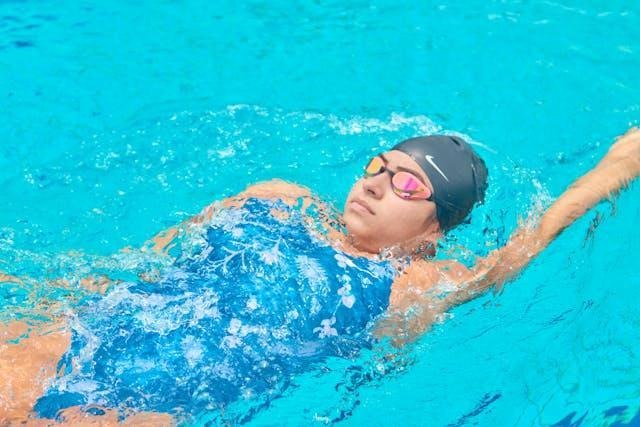
The smell of chlorine mixed with sunscreen. The echo of children’s laughter bouncing off pool walls. The sight of a parent’s face lighting up when their child lets go of the wall for the first time. These are the sensory memories that define swimming classes—and they’re happening every day right here in Clyde.
I’ll never forget watching Tom, a dad from one of the new estates near Selandra Rise, choke up during his son’s lesson. His boy had been petrified of water after a scary moment at a beach holiday six months earlier. But there he was, floating on his back with the biggest grin you’ve ever seen, finally free from that fear. “I didn’t think we’d get here,” Tom told me afterward, his voice thick with emotion.
That’s the thing about learning to swim—it’s never just about the strokes.
Why This Matters More Than You Might Think
Look, I get it. Your schedule is already bursting. Between work, school pickups, soccer practice, and everything else, adding another weekly commitment feels overwhelming. But here’s what I’ve learned after years of watching families navigate swimming education: this is one commitment that pays dividends you can’t get anywhere else.
We live in Australia—a country defined by water. Our coastline stretches over 25,000 kilometers. Backyard pools are as common as Hills Hoists. Yet drowning remains one of the leading causes of accidental death for young children. According to Royal Life Saving Australia, an average of 57 children under 15 drown each year in Australia. Most of these tragedies happen in familiar places—backyard pools, local beaches, family friend’s homes.
The statistic that should jolt every parent awake? Most drowning victims were in the care of adults at the time. Supervision matters, absolutely. But supervision has gaps—a phone call, a sibling’s scraped knee, a moment turning away to grab a towel. Swimming ability provides a crucial backup layer of protection when those inevitable gaps occur.
Clyde sits in one of Melbourne’s fastest-growing regions. The Cardinia Shire has welcomed thousands of young families in recent years, drawn by affordable housing and a genuine sense of community. New estates mean new pools. Growing communities mean more children around water. This makes access to quality swimming lessons Clyde families can trust more critical than ever.
What Makes a Swimming Program Actually Good?
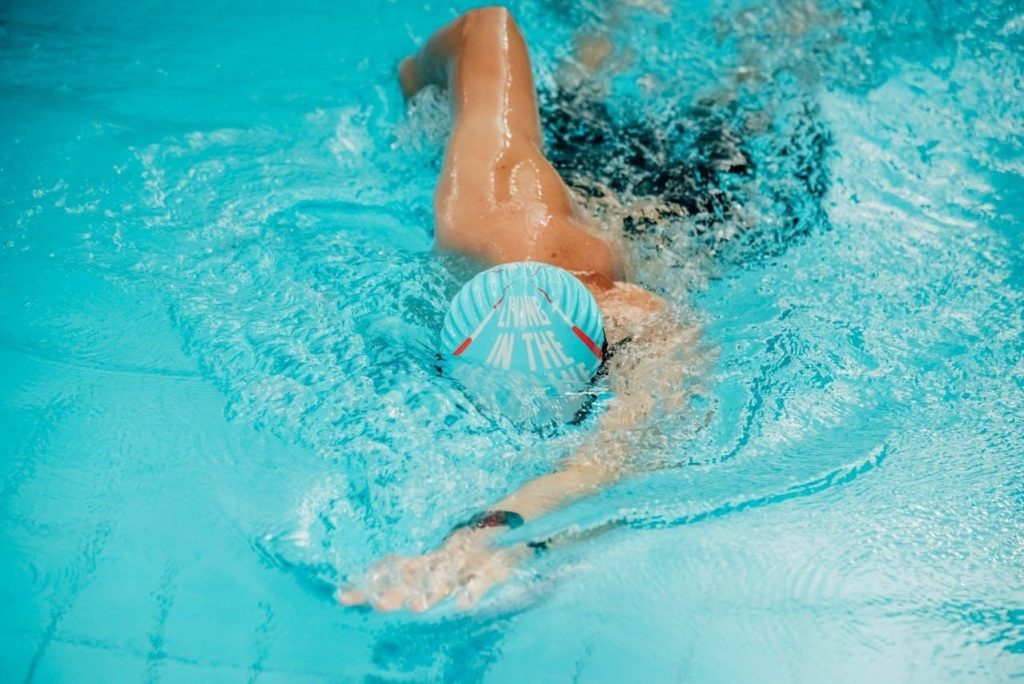
Here’s something most articles won’t tell you: fancy facilities don’t guarantee quality instruction. I’ve seen kids thrive in modest community pools with exceptional teachers, and I’ve seen expensive aquatic centers with instructors who seemed to be going through the motions.
So what should you actually look for?
The instructor makes or breaks everything. Full stop. Your child’s teacher should hold current Austswim certification—that’s the Australian industry standard. But beyond credentials, watch how they interact with kids during a trial lesson. Do they get down to the children’s eye level? Do they celebrate small wins with genuine enthusiasm? Can they read when a child is genuinely scared versus just being stubborn? These soft skills matter more than perfect breaststroke technique.
I remember chatting with Lisa, an instructor at one of Clyde’s swim schools, about what makes teaching swimming different from other skills. “You’re asking children to go against every survival instinct,” she explained. “Their body is telling them water is dangerous. You need to build trust before you build technique.” That wisdom, earned over fifteen years and thousands of students, doesn’t come from a textbook.
Class sizes tell you about priorities. If you’re looking at groups of eight to ten young children per instructor, warning bells should ring. For children under five, you want ratios of about 1:4 maximum. For older kids learning fundamentals, 1:6 works. Yes, smaller classes cost more. But this isn’t the place to bargain hunt—your child’s safety and genuine skill development depend on adequate individual attention.
Water temperature matters way more than you’d think. Ever notice how quickly kids start shivering in pools, even on warm days? Young bodies lose heat rapidly in water. For babies and toddlers, pool temperatures should hover around 32-34°C. For older children, 29-31°C works well. If a facility can’t or won’t tell you their water temperature, that’s a red flag. Cold children don’t learn—they’re too busy trying to warm up.
Progressive, individualized programs beat age-based grouping. Not every six-year-old belongs in the same class. Some six-year-olds are water babies who’ve been swimming since infancy. Others are just beginning to overcome their fear. The best programs, like what you’ll find at Star Swim Schools, assess each child individually and group by actual ability and comfort level, not just birthday.
The Better Health Channel emphasizes that swimming provides exceptional benefits for children’s physical development, cardiovascular health, and coordination—but only when taught in environments where children feel safe and supported. Rushed, stressful lessons create water anxiety, not water confidence.
The Real Journey: What to Actually Expect
Let’s talk honestly about what learning to swim looks like, because expectations matter.
For babies and toddlers (4 months to 3 years), you’re in the water together. These parent-and-baby classes aren’t really “lessons” in the traditional sense. Your baby isn’t going to swim laps. Instead, you’re building positive associations—games, songs, gentle submersion, floating while supported. It’s play with purpose. The goal is simple: help your child feel that water is a fun, safe place.
My friend Rachel started her daughter in classes at four months. “I felt a bit silly at first,” she admitted. “Just bouncing around in the water singing ‘Wheels on the Bus.’ But by twelve months, Maya would put her face in the water without hesitation. Her friends who started later at two or three? They took much longer to get comfortable.”
For preschoolers (3-5 years), swimming class Clyde programs start introducing actual skills—blowing bubbles, floating with assistance, kicking with proper form. Progress feels sporadic. Your child might have a breakthrough one week, then refuse to let go of you the next. This is completely normal. Young children’s confidence ebbs and flows with everything from sleep quality to what happened at kindergarten that day.
Don’t compare your child to others in the class. I’ve watched parents drive themselves (and their kids) crazy doing this. Every child’s swimming journey is unique. The kid who seems miles ahead now might plateau later. The nervous one clinging to the edge this month might suddenly take off next term.
School-age children (5-12 years) move through structured skill levels—from basic water safety through to competitive strokes. This is where you see dramatic transformation. A child who started the year barely able to float might end it swimming 25 meters confidently. The development follows a generally predictable path: water entry and exit, floating, basic propulsion, freestyle, backstroke, breathing technique, breaststroke, and eventually butterfly.
One thing that surprised me: survival skills matter as much as stroke technique in quality programs. Can your child tread water for several minutes? Can they float on their back to rest? Can they swim in clothes if they fall in accidentally? These practical skills save lives more often than perfect butterfly form.
Adults learning to swim face unique challenges and advantages. If you’re reading this as someone who never learned properly—or at all—you’re far from alone. Plenty of Australian adults can’t swim confidently. Maybe you grew up in an area without pool access. Maybe a scary experience left you anxious around water. Maybe it just never happened.
Adult swimming lessons Clyde offers recognize that grown-ups need different teaching approaches than kids. You understand instructions more quickly but might carry more fear or embarrassment. You need logical explanations for techniques, not just “do this.” And you absolutely deserve classes separate from children—learning alongside seven-year-olds feels demoralizing, even though it shouldn’t.
James, a 34-year-old tradie I met at the pool, put it perfectly: “I’ve been making excuses for years. Beach trips with mates, pool parties with the kids—I was always the one staying shallow. Finally admitting I couldn’t swim and signing up for lessons? Best decision I’ve made.” Six months later, he was swimming laps for fitness.
The Ripple Effects You Don’t See Coming
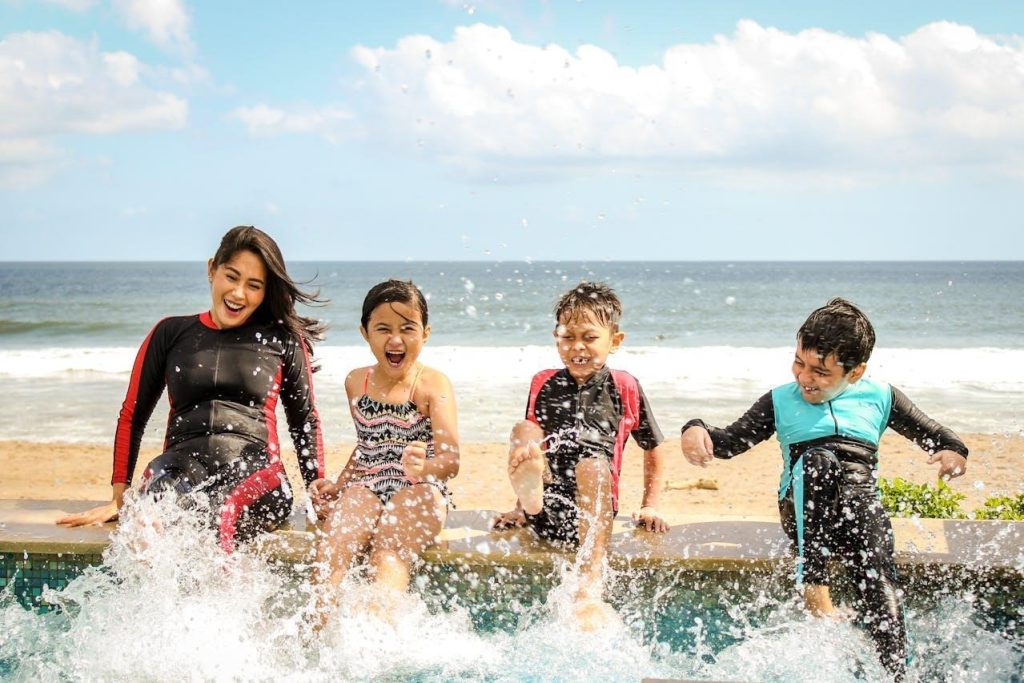
Swimming lessons deliver benefits that extend far beyond the pool deck in ways that genuinely surprised me.
Physical health. Obviously swimming provides fantastic exercise—full-body cardiovascular workout, strength building, flexibility, zero joint impact. But here’s what I didn’t expect: kids who struggle with coordination in land-based sports often excel in water. The buoyancy helps them succeed where they’ve previously felt clumsy or frustrated. For children with sensory processing differences, the water’s pressure and resistance can be genuinely therapeutic.
Mental wellbeing. The research from institutions like the University of Melbourne shows that regular swimming reduces anxiety and depression markers in both children and adults. There’s something meditative about the rhythm of swimming—breath, stroke, breath, stroke. It forces you into the present moment. One parent told me her anxious eight-year-old was noticeably calmer on swimming days, the exercise helping regulate his nervous system.
Confidence that transfers. This was the benefit I saw most dramatically. Children who conquer water fears carry that “I can do hard things” attitude into other challenges. Swimming requires genuine effort—you can’t fake it or coast on natural talent alone. Every child who masters swimming has evidence they can overcome obstacles through persistence.
Watching Sophie, a shy six-year-old, transform over a year of lessons was remarkable. She started barely able to make eye contact with her instructor. By the end, she was volunteering to demonstrate techniques for the class. Her mother said the confidence bled into school—raising her hand more, making new friends, trying new activities. “Swimming taught her she’s braver than she thought,” her mum explained.
Family bonding and opportunities. Beach holidays transform when everyone swims competently. Instead of stress-filled supervision marathons, they become genuinely relaxing. You can snorkel together. Play in waves. Explore rock pools. The activities available to swimming families versus non-swimming families differ dramatically.
Plus, swimming creates shared family experiences. My neighbor’s family does “Sunday swim sessions” together every week—all four of them in the pool, practicing skills, playing games, just being together. In a world of scattered schedules and screen time, these consistent family rituals matter more than ever.
Local Considerations: Why Location Actually Matters
Clyde isn’t just any suburb—it’s a community with specific characteristics that influence how families approach swimming education.
The growth here has been explosive. New estates like Riverwalk and Selandra Rise have attracted thousands of young families, many with children under ten. These aren’t just houses—they’re homes with pools, near other homes with pools, in a region with accessible beaches within an hour’s drive. Water is everywhere.
The demographic skews young and family-focused. These are often first-home buyers, parents making the classic suburban dream work. Money matters. Time matters. Convenience matters. You need swimming lessons that fit a realistic budget and schedule—not boutique programs requiring forty-minute drives and eye-watering fees.
The community feel here is genuine. Families know each other. Kids play together. Parents chat at school pickup. This means swimming lessons become social opportunities too—your child’s classmates might be in the same lesson, making the whole experience more comfortable and fun.
Clyde’s climate—typical Melbourne with hot summers and mild winters—means year-round swimming in heated pools is completely feasible. But it also means seasonal awareness matters. Summer lessons are more popular (and sometimes harder to book), while winter represents opportunity for committed families to gain ground while others take breaks.
When you search for “swimming lessons near me” as a Clyde resident, proximity genuinely matters. A program fifteen minutes away you’ll attend consistently beats a “perfect” program thirty-five minutes away that becomes a chore. Star Swim Schools’ Clyde location understands this, offering convenient scheduling that works with real suburban family life—after-school slots, weekend options, school holiday intensives.
Making the Decision: Your Practical Next Steps
You’re probably wondering: how do I actually choose? With several options available, the decision can feel paralyzing. Here’s how to approach it practically.
Start with a trial lesson. Most quality programs offer these. During the trial, you’re not primarily evaluating whether your child does well—of course they won’t be amazing on day one. Instead, notice:
- How does the instructor communicate with your child?
- Does your child seem engaged or scared?
- Is the facility clean, well-maintained, appropriately warm?
- Can you see yourself making this commute weekly?
- Does the administrative side seem organized and professional?
Trust your gut. If something feels off—whether it’s the instructor’s energy, the facility’s vibe, or just an indefinable sense—listen to that instinct.
Ask specific questions. Don’t be shy about inquiring:
- What are instructor qualifications and ratios?
- How is progress tracked and communicated?
- What’s the makeup/cancel policy? (Life happens—flexibility matters)
- How are children grouped and potentially moved between levels?
- What’s the water temperature maintained at?
Quality programs welcome these questions. Evasive or annoyed responses? Red flag.
Consider your child’s personality. A naturally outgoing, physically confident child might thrive in larger groups. An anxious or shy child needs smaller ratios and patient instructors. A child with special needs requires instructors trained in adaptive aquatics. One size definitely doesn’t fit all.
Think long-term, not just first term. Swimming skill development takes time—months and years, not weeks. Choose a program you can commit to consistently. Irregular attendance produces irregular results. The child who attends 45 of 48 possible lessons annually will dramatically outpace the child attending 20.
Don’t let fear hold you back. I’ve met parents who delayed enrolling their fearful child, hoping they’d “outgrow” the anxiety. Rarely happens. Usually that fear entrenches. Starting earlier with the right program almost always works better than waiting.
The Investment Conversation
Let’s talk money, because I know it matters.
Swimming lessons Clyde typically range from $18-35 per group lesson, depending on factors like class size, lesson length, and facility quality. Private lessons run $40-80. Most schools sell term packages (eight to twelve weeks) with per-lesson discounts.
This can feel expensive when you tally it up—potentially $200-400 per term per child. For families with multiple kids, it’s a genuine budget consideration.
But here’s how I’ve heard smart parents frame it: this is insurance spending. You’re literally purchasing a skill that could save your child’s life. When you factor the cost per week—maybe $20-30—it’s less than many families spend on takeaway coffee. When you consider the potential consequences of not learning—it’s priceless.
Look for value, not just low prices. The cheapest program is rarely the best program. Cut corners on entertainment, sure. Don’t cut corners on safety education. That said, expensive doesn’t automatically mean quality either—evaluate based on the criteria above, not price alone.
Some families qualify for fee assistance through programs like KidSport, which helps fund sports and recreation for eligible families. Worth investigating if affordability is challenging.
Expert Voices: What the Professionals Say
Dr. Sarah Chen, a pediatric development specialist based in Melbourne, emphasizes something that resonated with me: “Swimming lessons support development far beyond physical skills. The process of learning something genuinely difficult, experiencing setbacks, persisting, and eventually succeeding—this builds resilience we see transfer to academic and social challenges. Plus, the bilateral coordination required for swimming strokes enhances neural pathway development in ways that benefit cognitive function.”
Laurie Lawrence, one of Australia’s most respected swimming coaches and water safety advocates, has spent decades emphasizing: “Every Australian child deserves the opportunity to learn to swim. It’s not a luxury—it’s a life skill as essential as reading or crossing the road safely. The investment families make in swimming education is one they’ll never regret, whether their child becomes an Olympic swimmer or simply enjoys safe, confident swimming throughout their life.”
These aren’t just nice sentiments—they reflect decades of research and experience seeing swimming’s impact on families and communities.
Common Questions Parents Actually Ask
“My child is terrified of water. Should we even try lessons?”
Absolutely yes—but choose carefully. The right instructor can work wonders with fearful children, moving at their pace without pushing too hard. This actually takes more skill than teaching confident kids. Look for programs specifically mentioning experience with anxious learners. Tell the instructor upfront about your child’s fear. A good teacher will see this as valuable information, not a problem.
Progress might be slow initially. That’s okay. The goal is building comfort, not rushing through skills. I’ve seen children take three months just to be willing to sit on the pool edge with feet in water—then suddenly accelerate once they felt safe.
“We’ve tried three different programs and my kid still can’t swim. What are we doing wrong?”
Probably nothing. Some children simply take longer. Factors include natural comfort with water, physical coordination, temperament, and even birth order (younger siblings often learn faster, having watched older ones). However, if you’ve genuinely committed to consistent attendance across multiple programs without progress, consider:
- Are lessons frequent enough? Once weekly is standard, but some children need twice weekly for momentum.
- Is the instruction style matching your child’s learning style?
- Could there be underlying issues—vision problems, ear infections, sensory processing challenges—making swimming harder?
- Is there pressure or stress making lessons negative?
Sometimes a break helps. Come back fresh in six months with renewed perspective.
“Should we do private or group swimming class Clyde options?”
Most families benefit from group lessons as the foundation—better value, social learning, peer motivation. Kids often push harder trying to keep up with classmates than they would one-on-one.
Private lessons shine for:
- Children with significant fears requiring individualized attention
- Kids with special needs
- Advanced swimmers training competitively
- Adult learners wanting intensive focus
- Supplementing group lessons to overcome specific barriers
Many families successfully combine both—regular group classes plus occasional private sessions addressing particular challenges.
“What’s a realistic timeline for my child to swim independently?”
This varies enormously, so take any specific timeline with skepticism. General rough benchmarks:
- Starting at 3-4 years old, attending weekly: basic independent swimming (5-10 meters) often emerges within 6-12 months
- Confident swimming across pool (25 meters): 1-2 years
- Multiple strokes with good technique: 2-3 years
Starting younger (parent-baby classes) usually means smoother, faster progress when formal instruction begins. Starting older (school age) can mean faster initial skill acquisition but possibly more fear to overcome.
Children learning in summer versus year-round show different progress patterns—summer-only swimmers often regress between seasons.
“How do I know if our current program is actually good enough?”
Ask yourself:
- Is my child progressing, even slowly?
- Does my child generally enjoy lessons (reluctance before is normal; misery during is concerning)?
- Can I clearly see what skills are being taught and why?
- Do instructors communicate well with both children and parents?
- Does the facility meet basic safety and comfort standards?
- Are class sizes appropriate?
If you’re answering no to several of these, it might be time to explore alternatives.
The Safety Conversation We Need to Have
Swimming lessons are crucial, but they’re not magic immunity. This is something quality programs emphasize but bears repeating: swimming ability is one layer of water safety, not the only layer.
According to Royal Life Saving Australia, comprehensive water safety requires:
Supervision. Active, not passive. Put the phone away during pool time. Stay within arm’s reach of young or weak swimmers. Designate a specific adult as the “water watcher” at gatherings.
Barriers. Pool fencing compliant with Australian Standards (AS 1926.1) is mandatory—and genuinely prevents deaths. Gates that self-close and self-latch make the difference between safety and tragedy.
Swimming ability. This is where lessons come in—giving children skills to self-rescue if they unexpectedly enter water.
Emergency preparation. Know CPR. Keep rescue equipment accessible. Have a cordless phone near the pool.
Don’t let swimming lessons create false security. Kids who swim well can still drown—through exhaustion, rip currents, entrapment, or unexpected situations. Maintain vigilance even as skills improve.
Your Next Step: Making It Real
You’ve read this far, which suggests you’re genuinely considering swimming lessons for your family. That’s wonderful. So here’s my challenge: don’t let this be another thing you meant to do but never quite got around to.
The families I’ve seen who regret their swimming decisions? They’re not the ones who chose one program over another. They’re the ones who kept putting it off—”next term,” “when things settle down,” “when we have more money.” Weeks become months become years. The window where young children naturally take to water gets narrower.
The best time to start swimming lessons? Three years ago. The second-best time? Today.
Visit Star Swim Schools and book a trial lesson. See how your child responds. Experience the facility. Meet the instructors. Make an informed decision based on actual experience, not endless research paralysis.
Swimming is one of those rare skills that serves you across your entire lifetime—childhood safety, teenage confidence, adult fitness, elderly mobility. The lessons you enroll in today might seem like just another weekday commitment. But decades from now, when your adult child is confidently teaching their own kids to swim, you’ll recognize the gift you gave them.
The water is waiting. Your family’s swimming journey begins with a single decision—to make this priority real, not just theoretical. Clyde families have excellent options available. The only question left is: what’s stopping you from taking that first step?