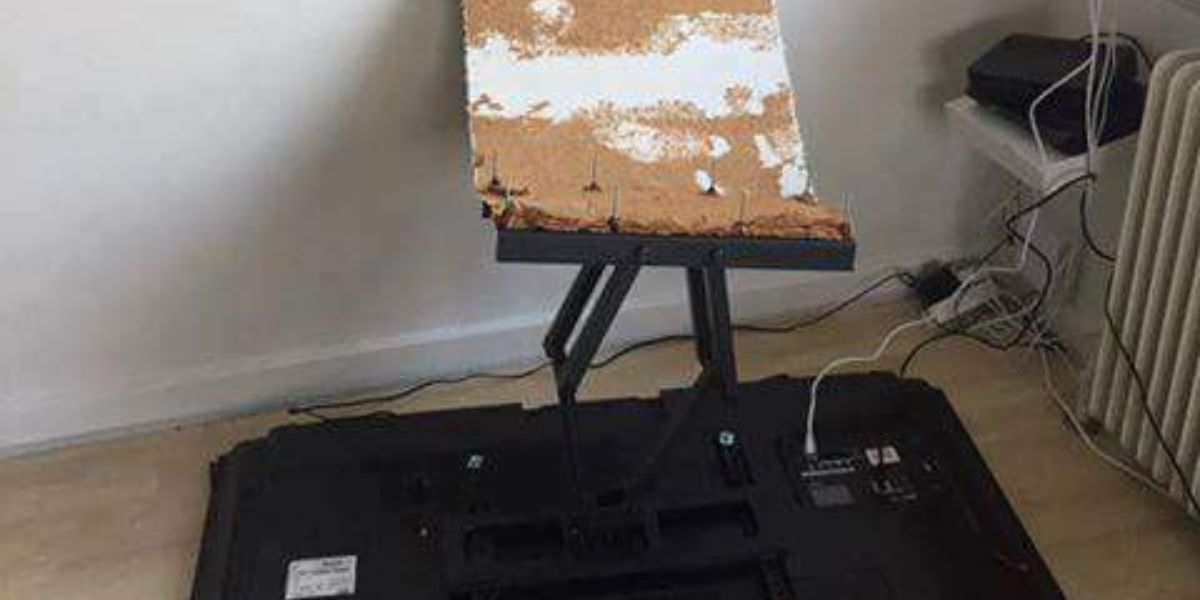
A towel bar, shelf, coat hook, curtain bracket, or similar fixture shouldn’t move every time it’s touched. Loose wall fixtures often indicate a failing anchor, enlarged screw hole, missed stud, damaged drywall, or too much weight on the mounting hardware. Fixing the attachment early can prevent a small loose screw from tearing away a larger section of wall.
Remove the Load Before Inspecting the Mount
Take weight off the fixture before tightening anything. Remove items from shelves, hooks, or racks so the fasteners aren’t under stress while you work.
Check whether the entire bracket moves or only one screw. A spinning screw often means the anchor or surrounding wall material no longer grips properly.
Broader indoor fixture guidance can help put these repairs in context because the correct mounting method depends heavily on both the fixture and the wall behind it.
Find Out What the Fastener Is Holding Onto
Wallboard alone shouldn’t be treated like solid lumber. A screw driven into a stud can support loads differently from one held by a hollow-wall anchor.
Use a reliable method to identify framing when needed. If the fixture was supposed to attach to a stud but missed it, repositioning the mount may be better than repeatedly installing larger screws into damaged drywall.
Exterior attachments face different weather and material concerns, but exterior home maintenance illustrates the same basic principle: fasteners need to match both the substrate and the conditions around them.
Replace Failed Anchors Correctly
Remove damaged anchors rather than tightening them endlessly. Inspect the hole for crumbling drywall before choosing a replacement.
| Problem | Likely Cause | Better Response |
|---|---|---|
| Screw spins | Stripped anchor | Replace anchor |
| Bracket tilts | Uneven attachment | Recheck mounting points |
| Drywall crumbles | Hole enlarged | Repair or relocate |
| Fixture repeatedly loosens | Excess load | Improve support |
Choose an anchor rated and intended for the wall type and expected load. Manufacturer ratings depend on installation conditions, so don’t assume every anchor of the same size performs identically.
Reinstall and Test the Fixture Gradually
Position the bracket correctly before tightening the hardware. Tighten each fastener enough to secure the fixture without crushing drywall or deforming the bracket.
Add weight gradually after installation. If the fixture starts moving again, stop loading it and inspect the mount rather than tightening the same failing connection.
Related patio mounting ideas can also highlight how brackets and mounted accessories need suitable attachment points, although outdoor surfaces often require different fasteners from interior drywall.
If the fixture is an electrical light, switch off the appropriate circuit before disturbing wiring or mounting hardware. When wiring, electrical boxes, or connections appear damaged or uncertain, use a qualified electrician instead of treating the job like an ordinary shelf repair.
Shortcuts That Can Damage the Wall
Installing a larger screw into the same ruined anchor isn’t a dependable repair. The fastener may feel tight briefly while continuing to crush the surrounding drywall.
Another mistake is ignoring load. A light towel ring and a heavily loaded shelf don’t need the same mounting method. Adhesive, undersized anchors, or decorative screws may be acceptable for some lightweight items but inappropriate for fixtures carrying significant weight.
Frequently Asked Questions
Can I reuse a loose drywall anchor?
A damaged or spinning anchor usually should be replaced. Reusing it can leave the fixture dependent on wall material that has already lost its grip.
Should every wall fixture be screwed into a stud?
No. Many lightweight fixtures can be installed with suitable wall anchors. Heavier items often benefit from stud attachment or another mounting method specifically designed for the expected load.
Why does a wall fixture keep becoming loose?
Common reasons include the wrong anchor, an enlarged hole, excess weight, movement during use, or a mounting point that never engaged solid support. Repeated tightening won’t correct a failed attachment.
Secure the Mount Before Reusing It
A loose fixture is easier to repair before it pulls away completely. Remove the load, identify what the fastener is attached to, replace failed anchors, and match the hardware to the wall and expected weight. Don’t rely on repeated tightening when the mounting material has already failed. A firm attachment protects both the fixture and the wall around it.