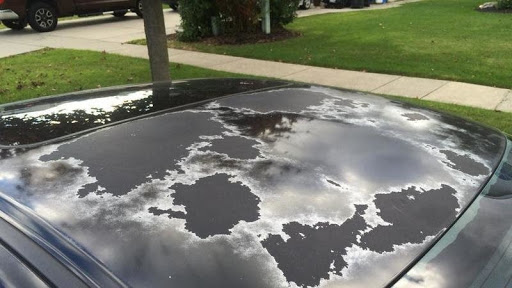
Clear coat peeling usually means the transparent protective layer over the vehicle’s color has begun separating or breaking down. It may start as cloudy patches, small lifting edges, or localized flaking before spreading across a larger panel.
Once clear-coat failure begins, wax and ordinary polishing cannot rebuild the missing layer. Early assessment helps prevent unnecessary detailing work and clarifies whether localized refinishing or broader paint repair is needed.
Recognize Clear-Coat Failure Early
Healthy clear coat should form a continuous protective surface. Failure may appear as white or hazy spots, rough transitions, flakes, or areas where the color underneath looks noticeably different.
Exposure to strong sunlight and heat can contribute to deterioration, although previous repairs, coating thickness, chemical damage, and general paint history also matter. Drivers reading automotive care topics should distinguish physical peeling from simple oxidation before attempting correction.
Check the Edges of the Damage
Peeling often has a visible boundary where intact coating meets material that’s lifting away. Running a fingernail lightly near the area may reveal a physical edge, but avoid picking or scraping at loose material.
Polishable oxidation generally behaves differently because the coating remains attached even though its surface has lost clarity.
| Visible Change | What It May Indicate | Best Direction |
|---|---|---|
| Dull but smooth paint | Oxidation | Test correction |
| White lifting edges | Clear-coat failure | Refinishing |
| Loose flakes | Advanced peeling | Avoid polishing |
| Exposed color layer | Protection lost | Repair promptly |
Avoid Aggressive Polishing on Peeling Areas
Compounding can’t restore material that’s no longer bonded to the panel. A rotary or dual-action polisher may catch loose edges and enlarge the damaged section.
Information encountered through vehicle reference listings may cover many paint-correction methods, yet correction techniques designed for intact coatings shouldn’t automatically be applied to failing clear coat.
Wash peeling areas gently and avoid hard scrubbing. Strong pressure from close-range pressure washing can also lift weakened coating farther from the surface.
Protect surrounding intact paint normally, but don’t mistake temporary shine from wax for an actual repair.
Understand What Real Repair Involves
Proper repair usually requires removing unstable material and creating a sound surface before new coating is applied. The exact approach depends on how large the failure is, how deeply the paint system is damaged, and whether color blending is necessary.
A small isolated defect may differ significantly from a roof or hood with widespread delamination. Body shops can assess whether localized refinishing is practical or whether the complete panel needs attention.
People comparing repair ideas across general online publications should be cautious with shortcuts that promise to permanently restore peeling clear coat using a wipe-on product alone. Appearance may change temporarily without correcting the failed coating underneath.
Shortcuts That Often Make Damage Worse
Sanding without understanding paint layers is a common risk. Cutting too deeply can damage the color coat or expose primer, turning a limited repair into a more complicated refinishing job.
Another mistake is pulling loose clear coat away by hand. Once an edge starts lifting, peeling it can carry the failure farther than expected.
Clear spray applied directly over dirty, unstable, or poorly prepared coating can also produce an uneven finish and weak adhesion. Surface preparation is a major part of refinishing, not an optional detail.
Frequently Asked Questions
Can peeling clear coat be stopped with wax?
Wax may protect nearby intact paint, but it can’t rebond clear coat that has already separated. Once peeling starts, the damaged area generally requires refinishing for a durable result.
Can clear coat peeling spread?
Yes. The boundary between attached and failed coating may continue deteriorating under environmental exposure, washing, and physical disturbance. How quickly it progresses depends on the condition of the remaining paint.
Is clear-coat repair a DIY job?
Small cosmetic repairs may be attempted by experienced DIY owners, but achieving smooth blending and durable adhesion can be difficult. Large, highly visible, or deeply damaged areas are usually better assessed by a refinishing professional.
Repair the Failure Instead of Hiding It
Once clear coat begins peeling, stop treating the problem like ordinary dull paint. Keep the surface clean, avoid aggressive correction around loose edges, and have the damaged area assessed before more coating separates.
Early repair can keep a localized defect from becoming a larger refinishing project. The goal isn’t temporary shine; it’s restoring a stable protective finish over the paint.