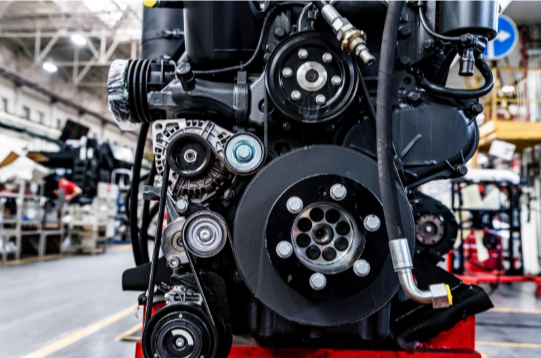
The moment a vehicle’s engine fails, its owner faces a decision that carries both financial and environmental weight. The instinct for many is to start shopping for a replacement vehicle, but an increasingly popular alternative challenges that default response. Engine swaps — particularly using low-mileage imported Japanese powertrains — offer a way to restore a vehicle to full functionality at a fraction of the cost of purchasing new. Beyond the personal savings, this approach contributes to a broader shift toward more sustainable automotive practices that reduce waste and conserve resources.
The Hidden Costs of Buying a New Vehicle
On the surface, replacing a failed-engine vehicle with a new one seems straightforward. But the financial reality of new vehicle ownership in today’s market tells a different story. Average new vehicle transaction prices have climbed steadily, and monthly loan payments now represent a significant portion of household budgets across the country. Even certified pre-owned vehicles carry premium pricing that reflects the current demand dynamics in the used car market.
Beyond the sticker price, new vehicle ownership introduces a cascade of additional costs. Comprehensive insurance premiums are substantially higher for new vehicles. Registration and title fees scale with vehicle value. And perhaps most significantly, depreciation erodes equity at a punishing rate — a new vehicle typically loses between fifteen and twenty-five percent of its value within the first year alone. Over a five-year financing period, the total cost of ownership for a new vehicle — including depreciation, insurance, maintenance, and financing charges — can be staggering.
Contrast this with the economics of an engine swap on an existing vehicle. The total cost of a quality imported JDM engine, installation labor, and supporting maintenance items often falls between two and five thousand dollars depending on the application. For an owner whose vehicle has a solid body, functioning electronics, and a paid-off loan, this investment extends the vehicle’s service life by potentially 100,000 miles or more while avoiding the financial burden of a new vehicle purchase.
Environmental Impact: Why Reuse Beats Replacement
The environmental argument for engine swaps has gained considerable traction as consumers become more conscious of sustainability. Manufacturing a new vehicle consumes enormous quantities of energy, water, raw materials, and petrochemicals. From mining the metals for the body and drivetrain to producing the plastics, glass, and electronics, the carbon footprint of building a single vehicle is substantial long before it burns its first drop of fuel.
When a vehicle is scrapped prematurely due to engine failure while its body, chassis, and other systems remain functional, all of the energy and materials invested in those components are effectively wasted. An engine swap preserves that embodied energy by keeping the existing vehicle in service. The replacement engine itself represents a component that would otherwise enter the recycling stream as scrap metal, so repurposing it as a functioning powertrain extracts additional value from an already-manufactured product.
This circular approach to vehicle maintenance aligns with broader waste reduction principles. Rather than treating a vehicle as disposable when one major component fails, the swap mentality recognizes that most of the vehicle’s systems still have useful life remaining. It’s a practical application of sustainable thinking that doesn’t require compromising on reliability or performance.
The Quality Advantage of Japanese-Sourced Engines
Japan’s automotive manufacturing standards are among the highest in the world, and this quality extends to the used engines that enter the export market. The country’s vehicle inspection system, combined with a cultural emphasis on proper maintenance, produces a supply of used engines that consistently outperform expectations for their age and mileage.
Low-mileage JDM engines — typically ranging from 40,000 to 70,000 kilometers — offer a compelling value proposition. These units have been through their break-in period, which means the piston rings are properly seated and internal tolerances have stabilized. At the same time, they haven’t accumulated the kind of mileage that leads to significant wear on bearings, valve guides, and cylinder walls. This sweet spot of moderate use makes JDM engines ideal candidates for a second service life in an American vehicle.
For buyers researching available options, the official site of Texas JDM Motors provides an extensive selection of engines and transmissions covering popular Japanese makes. Their inventory spans Honda, Toyota, Nissan, Subaru, Mazda, Mitsubishi, Acura, Lexus, and Infiniti, making it straightforward to find a compatible replacement for most Japanese vehicles on American roads.
Real-World Scenarios Where Swaps Make Financial Sense
Consider a typical scenario: a 2008 Honda CR-V with 180,000 miles experiences a catastrophic engine failure. The vehicle’s body is rust-free, the interior is well-maintained, the transmission shifts smoothly, and all electronics function properly. The market value of this vehicle in running condition sits around six to eight thousand dollars, while a comparable replacement would cost roughly the same amount — with no guarantee of the replacement’s mechanical history.
Installing a low-mileage JDM K24 engine restores the CR-V to full functionality for a total investment significantly below the replacement vehicle’s purchase price. The owner retains a vehicle they know intimately — its maintenance history, its quirks, its verified condition in every area except the failed engine. This certainty has real value that’s difficult to replicate when purchasing someone else’s used vehicle.
The math works similarly across many Japanese models. Toyota Camry and Corolla owners, Nissan Altima and Frontier drivers, Subaru Forester and Outback enthusiasts — all can benefit from the swap approach when the engine fails but the rest of the vehicle remains solid.
What to Expect During the Swap Process
For vehicle owners who haven’t been through an engine swap before, understanding the general timeline and process helps set appropriate expectations. A straightforward engine replacement on a common vehicle typically takes a qualified mechanic between eight and fifteen hours of labor, depending on the complexity of the engine bay and the accessibility of mounting points and connections.
The process begins with removing the failed engine along with its associated accessories. The replacement engine is then inspected, and any necessary peripheral components — such as the intake manifold, exhaust manifold, alternator, and sensors — are transferred from the original engine if not included with the replacement unit. After the new engine is mounted and connected, the mechanic performs a thorough check of all fluid systems, electrical connections, and belt routing before the initial startup.
Post-installation verification includes checking for leaks, confirming proper operating temperature, testing engine-driven accessories, and verifying that the onboard diagnostics report no fault codes. A responsible shop will also perform a short road test to confirm smooth acceleration, proper transmission engagement, and normal driving behavior under various conditions.
Making an Informed Decision
Whether an engine swap makes sense depends on the overall condition of the vehicle, the cost of the replacement powertrain, and the owner’s long-term plans. Vehicles with significant body damage, extensive electrical problems, or severely worn suspension components may not justify the investment. But for the many Japanese vehicles that remain structurally sound despite an engine failure, the swap route offers a practical, economical, and environmentally responsible path forward.
The key is approaching the decision with complete information and working with reputable suppliers and qualified installers who can guide the process from selection through installation.