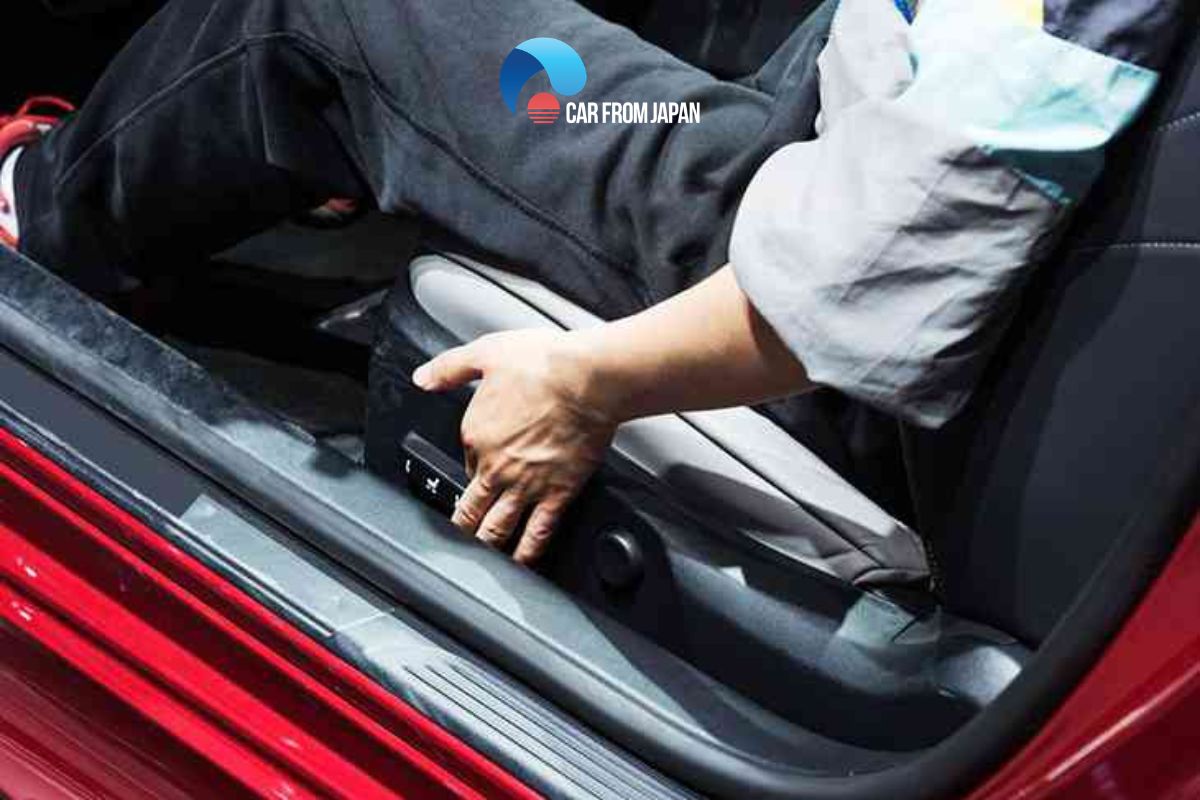
A power seat that won’t move may have a simple electrical problem rather than a failed seat assembly. Fuses, circuit breakers, switches, connectors, wiring, and individual motors can all stop seat movement. The direction that fails—and whether you hear a motor operating—provides useful clues before any trim or seat components are removed.
Determine What the Seat Still Does
Try each adjustment separately. Test forward, backward, front height, rear height, recline, and lumbar functions if your vehicle provides them.
If every movement is dead, a common power supply or ground becomes more likely. If only one direction fails, focus on the switch contacts, wiring, drive cable, gearbox, or motor responsible for that movement.
Owners reading vehicle component information may encounter several possible causes, but testing each seat function independently quickly narrows the problem.
Check the Fuse or Circuit Protection
Locate the seat fuse or circuit breaker using the vehicle documentation. Some power-seat systems use a self-resetting circuit breaker rather than an ordinary fuse because motors can draw substantial current during normal operation.
A failed fuse should be replaced only with the specified type and rating. If protection trips or fails repeatedly, look for a stalled motor, damaged wiring, mechanical obstruction, or short circuit.
Look Under the Seat
Coins, bottles, bags, floor mats, and other objects can interfere with seat tracks. Remove obstructions before repeatedly holding the switch because a jammed mechanism can place additional load on the motor.
| Seat Symptom | Possible Area | Diagnostic Clue |
|---|---|---|
| No functions work | Main supply | Check fuse/power |
| One direction fails | Switch or motor | Test that circuit |
| Motor runs, seat doesn’t move | Mechanical drive | Inspect track/cable |
| Operation is intermittent | Connector or wiring | Check harness movement |
Inspect Switch Operation
Seat switches contain multiple contacts because each motor usually needs to run in two directions. Worn or contaminated contacts can cause movement one way but not the other.
A technician may test whether the switch sends the correct power and ground commands when operated. General automotive electrical guidance can clarify circuit basics, though connector pin identification should come from model-specific wiring information.
Don’t bypass unknown terminals without knowing what they control.
Test Motors and Mechanical Drives
A motor sound with no seat movement often changes the direction of diagnosis. The electrical circuit may be operating while a drive cable, gearbox, track, or linkage has failed.
If the motor remains silent but receives the correct electrical supply when commanded, the motor itself becomes more suspect. Reading broader vehicle maintenance material can help owners understand common failure patterns, but access to power-seat motors varies greatly between models.
Seats may be heavy and can contain airbags or occupancy sensors, so removal requires extra care.
Where Power Seat Repairs Commonly Go Wrong
Replacing the motor because the seat doesn’t move is an expensive guess. A failed switch or damaged wire can leave a perfectly usable motor with no electrical command.
Another common error is forcing a jammed seat by repeatedly holding the switch. That can increase stress on cables, gears, motors, and circuit protection.
Finally, avoid disturbing connectors under the seat unnecessarily. Airbag and occupant-detection wiring may be routed beside the seat-motor harness.
Frequently Asked Questions
Why does my power seat move forward but not backward?
The switch may have a failed contact for one direction, or the motor circuit, wiring, or mechanical track may have a directional fault. Testing the command in both directions helps separate the possibilities.
Can a power seat fuse reset itself?
Some vehicles use circuit breakers that can reset after cooling, while others use conventional fuses that must be replaced after failure. Check the owner’s manual or service information for your specific vehicle.
Why can I hear the motor but the seat doesn’t move?
The motor may be turning while a drive cable, gear, linkage, or track isn’t transferring that motion to the seat. Mechanical inspection is the logical next step once electrical operation is confirmed.
Test Before Replacing Expensive Seat Parts
Begin by identifying which adjustments still work, then inspect circuit protection, wiring, connectors, and the switch before blaming the motor. If the motor receives the proper command, move the diagnosis toward the mechanical drive. That method keeps the repair focused and reduces the chance of replacing costly components that were operating normally.