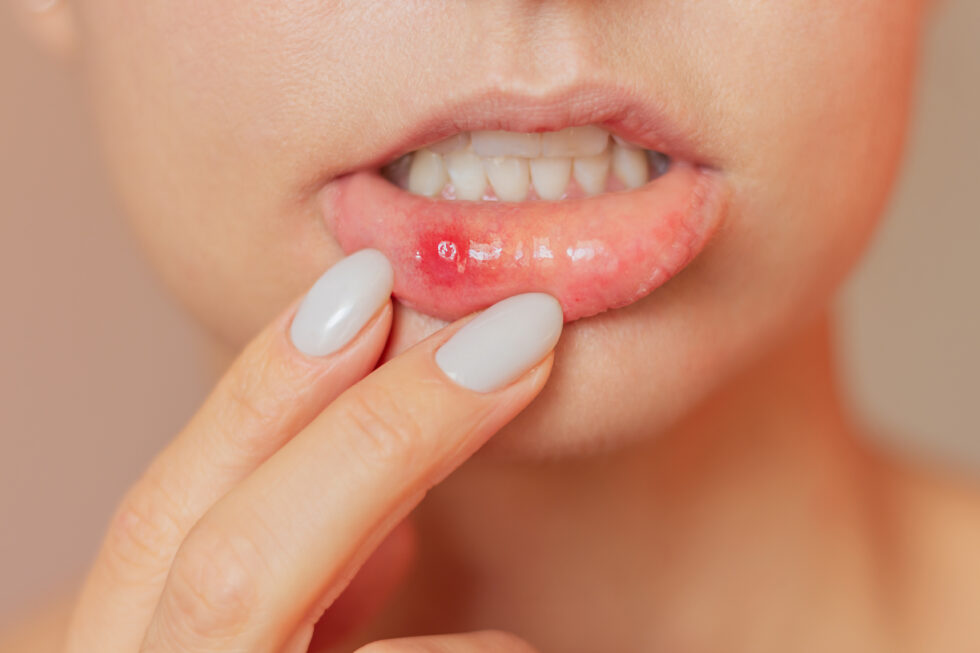
An occasional mouth sore is common, but repeated ulcers deserve more attention than simply waiting for each one to disappear. Location, appearance, timing, and possible triggers can help distinguish ordinary canker sores from other lesions. Keeping a record is especially useful when sores recur frequently or seem connected to foods, irritation, stress, or other health changes.
Start by Identifying What Kind of Sore Appears
Canker sores usually develop inside the mouth, often on the inner lips, cheeks, tongue, or gums. NIDCR describes them as painful white or yellow sores with a red border. Cold sores are different: they commonly occur outside the mouth around the lips and are caused by herpes simplex virus.
Photos saved for your clinician can be useful. By contrast, comparisons with general online reading shouldn’t be used to decide whether an unexplained lesion is harmless.
Look for Patterns Before the Next Outbreak
The precise cause of canker sores isn’t always known. NIDCR lists several possible triggers or associations, including minor injury, emotional stress, certain systemic diseases, and deficiencies involving iron, folate, or vitamin B12.
Record what happened before each outbreak: accidental cheek biting, dental work, stressful periods, new foods, or other symptoms. That approach provides more useful context than searching broad lifestyle material and trying to match your mouth to someone else’s description.
Reduce Irritation While a Sore Heals
Hot, acidic, or spicy foods can make canker sores more painful. NIDCR also advises avoiding mouthwashes containing alcohol because they may irritate sores.
Gentle oral hygiene remains important. Choose foods that are comfortable to eat and avoid repeatedly touching, scraping, or biting the lesion.
Repeated Sores Can Justify Further Evaluation
If sores occur frequently, a doctor or dentist may look beyond the individual ulcer. Depending on the history, evaluation can consider local trauma, oral conditions, nutritional issues, medication effects, or diseases associated with recurrent mouth ulcers.
Keep clinical information separate from everyday web content. A useful record includes the location, approximate duration, number of sores, accompanying symptoms, and whether lesions fully disappear between episodes.
| Pattern | What It May Suggest | Next Step |
|---|---|---|
| Single inner-mouth ulcer | Canker sore possible | Protect from irritation |
| Blisters near outer lip | Cold sore possible | Avoid assuming it’s a canker sore |
| Frequent recurrence | Trigger or condition may contribute | Discuss with clinician |
| Persistent lesion | Needs direct examination | Arrange dental or medical care |
Common Assumptions That Cause Confusion
A recurring mouth sore shouldn’t automatically be blamed on stress, vitamin deficiency, or a particular food. Those may be relevant in some people, but appearance and history alone don’t reliably identify every cause.
Likewise, not every mouth ulcer is a canker sore. Viral infections, trauma, medications, inflammatory conditions, and other oral diseases can produce lesions. Repeatedly treating an unidentified sore without evaluation can delay recognition of a different problem.
Which Mouth Sores Shouldn’t Be Ignored?
NIDCR advises seeing a dentist or physician when a mouth sore, irritation, lump, thick patch, or similar oral change persists for more than two weeks. This recommendation doesn’t mean a persistent sore is cancer; many noncancerous problems can look similar.
Seek care sooner for severe pain, high fever, rapidly spreading swelling, difficulty swallowing, dehydration, or major difficulty eating. For additional clinical context, see NIDCR’s guide to fever blisters and canker sores.
Frequently Asked Questions
Are canker sores contagious?
No. Canker sores aren’t contagious. Cold sores are different lesions caused by herpes simplex virus and can spread to other people, which is why distinguishing the two patterns matters.
Why do my mouth sores keep returning?
Recurring sores can be associated with local injury, stress, nutritional deficiencies, or certain medical conditions, although the cause isn’t always clear. Frequent episodes are worth discussing with a dentist or physician.
How long should I watch a mouth sore?
Many ordinary canker sores resolve on their own. However, an unexplained oral sore or other mouth change that lasts longer than two weeks should be examined rather than repeatedly monitored at home.
Use Recurrence as Useful Information
Don’t treat each new sore as an isolated annoyance if the pattern keeps repeating. Record when lesions appear, reduce obvious irritation, and watch whether they fully heal between episodes. Frequent, unusual, or persistent sores give a dentist or physician valuable clues and are worth evaluating rather than repeatedly guessing at the cause.
This article is for general informational purposes and is not a substitute for professional medical or dental advice, diagnosis, or treatment.