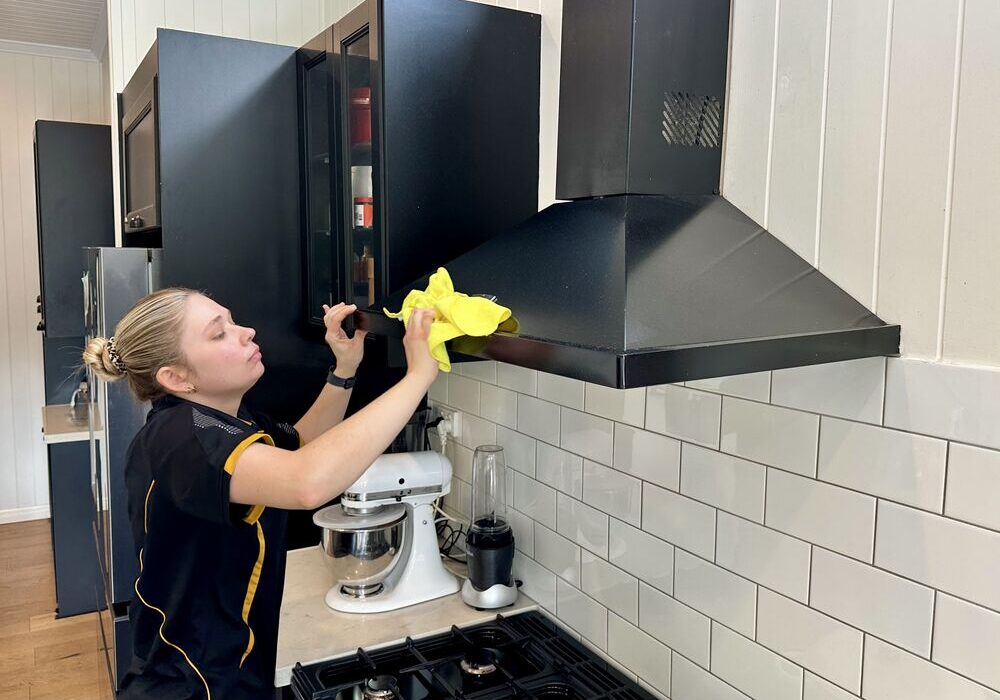
Range-hood grease starts as a thin cooking mist, but repeated heat turns it into a sticky layer that catches dust and becomes harder to remove. Regular degreasing prevents that film from hardening around the hood, vents, and filter area. The key is to clean removable and electrical parts differently.
Prepare the Hood Safely
Turn the range hood off and let nearby cooking surfaces cool completely. If you’re removing parts or cleaning close to controls and lighting, disconnect power according to the appliance instructions when practical.
Remove loose dust with a dry microfiber cloth. General practical home-maintenance ideas may cover many cleaning jobs, but range hoods need extra care because grease sits close to electrical components.
Check What Type of Filter You Have
Metal mesh or baffle filters are often designed to be cleaned, while many charcoal filters are intended for replacement rather than washing. Check the manufacturer’s instructions before soaking anything.
That distinction prevents a common problem: damaging a filter by treating every removable piece the same way.
Cut Through Grease With Warm Soapy Water
For a washable metal filter, fill a suitable basin with hot or warm water and dish soap, following appliance guidance. Let the grease soften, then scrub gently with a non-scratch brush.
Don’t force sharp objects through the mesh. Broader kitchen-cleaning guidance may help organize routine chores, yet a filter works best when its openings stay intact and free of compacted grease.
| Range-Hood Area | Cleaning Method | Main Caution |
|---|---|---|
| Metal filter | Warm soapy soak | Confirm it’s washable |
| Exterior shell | Damp microfiber | Avoid excess water |
| Control panel | Light wipe | Keep liquid out |
| Motor area | Follow manual | Don’t soak |
Wipe the Exterior Before Grease Hardens
Apply mild degreasing solution to a cloth rather than spraying heavily into seams. Wipe with the grain on stainless steel surfaces, then remove cleaner residue with a separate damp cloth if the product instructions call for it.
Routine cleaning reduces the need for aggressive scrubbing later. Keeping home cleaning references alongside an appliance-care schedule can be useful, but the hood manufacturer’s directions should decide which products are safe for its finish.
Clean Around Seams Carefully
Grease tends to collect along lower edges, light covers, and seams. Use a barely damp cloth or soft brush where appropriate, taking care not to push liquid into electrical openings.
Dry the exterior before restoring power or reinstalling parts.
Common Range-Hood Cleaning Mistakes
Waiting until grease feels hard and tacky makes the job much slower. Frequent light cleaning is usually easier on both the finish and the person doing the scrubbing.
Another mistake is soaking a filter without confirming its type. Charcoal filters and specialty components may not be washable. Spraying cleaner directly into vents, switches, or motor areas can also introduce moisture where it doesn’t belong. Avoid mixing cleaning chemicals or using harsh abrasives unless the appliance maker specifically permits them.
Frequently Asked Questions
How often should a range hood be degreased?
It depends on how often and what you cook. Inspect the hood and filter regularly. Frequent frying or high-heat cooking can create grease buildup faster than occasional boiling or baking.
Can range-hood filters go in the dishwasher?
Some washable metal filters may be dishwasher-safe, but not all finishes or filter types are. Check the appliance manual before using a dishwasher, especially if the filter contains aluminum or specialty materials.
Why is my range hood still sticky after cleaning?
Old grease may need more than one gentle cleaning pass, or cleaner residue may remain on the surface. Wipe again with a compatible damp cloth and dry thoroughly rather than immediately reaching for an abrasive product.
Clean Grease While It Is Still Easy to Remove
A range hood doesn’t need to look dirty before grease starts accumulating. Wipe accessible surfaces regularly, inspect the filter, and clean washable parts before residue becomes thick and hardened. Staying ahead of the buildup makes each cleaning session shorter and helps keep grease away from seams, controls, and harder-to-reach areas.