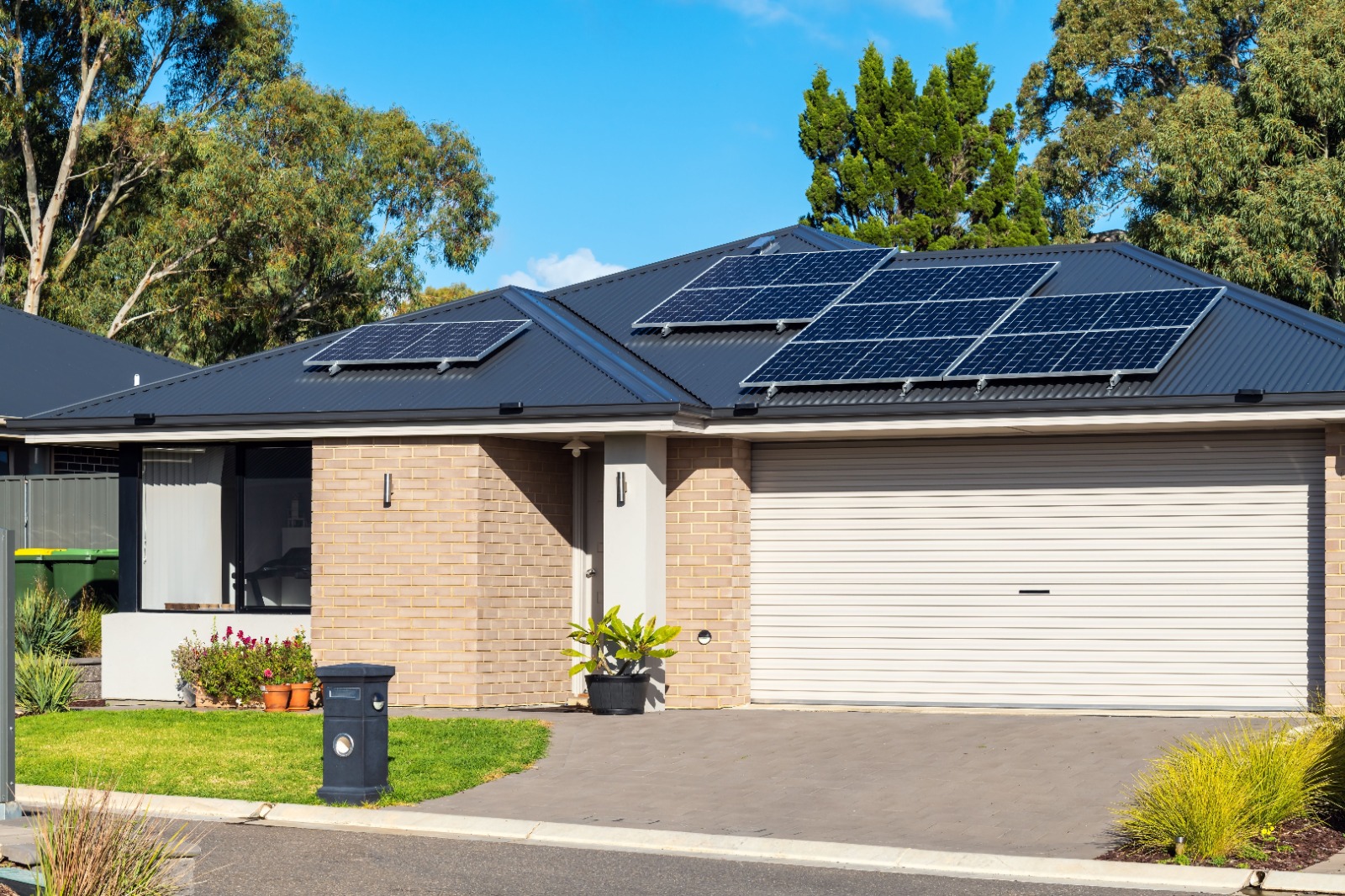
An honest financial and technical look at residential solar in Calgary — written by a roofing contractor that installs both roofs and solar.
Alberta gets more usable sunshine than any other Canadian province — an annual average of 2,300+ hours in Calgary, comparable to many parts of California. That solar resource, combined with falling panel prices and rising electricity rates, has pushed residential solar past the break-even point for an increasing share of Alberta homes. The question is no longer whether solar makes sense; it’s whether it makes sense for your specific roof, your specific consumption pattern, and your specific timeline.
This guide walks through what a 2026 solar installation in Calgary actually looks like — system sizing, real ROI math, the incentive landscape after recent program changes, and the roof-specific considerations that determine whether your house is a good or poor candidate. Honest answers, not vendor pitches.
How Calgary’s solar resource compares
Calgary’s solar potential surprises homeowners who associate solar with hotter southern climates. Cold weather actually improves photovoltaic panel efficiency — silicon cells generate slightly more power per unit of sunlight at -10°C than at +30°C. The dominant factor is hours of direct sun, not temperature, and Alberta’s dry continental climate delivers more clear days than most Canadian provinces.
A south-facing residential roof in Calgary at typical pitch produces roughly 1,200 kilowatt-hours per installed kilowatt of panel capacity per year. A 7 kW system — which is mid-size for a single-family home — generates around 8,400 kWh annually. The average Calgary household consumes 7,000 to 9,000 kWh per year, so a properly sized system can offset most or all of that consumption.
Production isn’t constant. Peak generation runs March through October. December and January generate roughly 25 to 35 percent of summer monthly output due to short days and snow cover on panels. The system makes annual sense, not monthly sense — and the financial math is built around 12-month net metering, not month-by-month accounting.
The real cost of a residential install
A turnkey 7 kW residential solar installation in Calgary in 2026 typically prices at $18,000 to $25,000 before incentives. The range reflects equipment quality (Tier 1 panels, microinverters versus string inverters), roof complexity, electrical panel upgrades, and whether the system includes battery storage.
Equipment is the largest single cost component, but installation labour, electrical work, permitting, and inverter selection meaningfully affect total. Microinverter systems — one inverter per panel — cost more upfront but produce 5 to 15 percent more energy over the system’s life and isolate the impact of partial shading. String inverters are cheaper and adequate for unshaded roofs.
Roof condition matters. A solar array adds 30+ years of service expectation to whatever it’s mounted on; mounting it on a 15-year-old asphalt roof commits the homeowner to either a shorter-lived solar installation or a roof replacement underneath the array later, which is expensive. Most reputable installers will recommend reroofing first if the existing roof has under 15 years of remaining life.
Incentives in 2026 — what’s available and what isn’t
The federal Canada Greener Homes Loan Program continues to offer interest-free loans up to $40,000 for qualifying energy retrofits, including solar PV. Loan terms run 10 years, with no interest charges over the term. The grant component of the original Greener Homes Grant program closed to new applications in 2024, but the loan remains active and is the largest single incentive available to Alberta homeowners in 2026.
Provincial and municipal incentives in Alberta have shifted multiple times in recent years. The City of Calgary’s Solar Incentive Program offered direct rebates for several years before changes; current Calgary-specific incentives should be verified directly with the city before installation, since program details have changed annually.
ENMAX, EPCOR, and other utilities offer net metering — meaning excess generation feeds back into the grid and credits the homeowner’s account. Net metering credits roll forward through the year and zero out at the anniversary date. Sizing the system to match (not exceed) annual consumption is the optimal strategy, since excess credits typically don’t pay out in cash.
ROI math for a typical Calgary home
Take a 7 kW installation at $22,000 net of any incentives, generating 8,400 kWh annually. At 2026 ENMAX rates including delivery, distribution, transmission, and energy charges, the average Calgary residential cost per kWh runs roughly $0.20 to $0.27 depending on usage tier and rider. Use $0.22 as a working figure.
Annual electricity offset: 8,400 kWh × $0.22 = $1,848 per year. Simple payback: $22,000 / $1,848 = 11.9 years. Over the panel’s 25-year warranty, total savings before discounting equal roughly $46,200, or net $24,200 above install cost.
The Greener Homes Loan effectively zeroes out the cost of capital for the first 10 years, which makes the after-financing payback dramatically faster — many homeowners see positive cashflow from year one because the monthly utility savings exceed the loan payment.
Numbers shift with electricity rate trends, panel degradation (typically 0.5 percent per year), and your specific roof orientation. Get a site-specific production estimate before committing — desktop estimates miss the shading and tilt details that move the answer 15 percent in either direction.
Roof considerations that decide candidacy
Not every roof is a good solar candidate. Five things matter:
- Orientation. South-facing roofs are best, southwest and southeast acceptable, east and west reduce annual production by roughly 15 percent, and pure north faces are usually disqualifying.
- Pitch. 30 to 40 degree pitches are optimal for Calgary’s latitude. Lower pitches lose winter production; higher pitches lose summer production but improve snow shedding.
- Shading. A single tree casting afternoon shade across the array can cut annual production 20 percent. Microinverters mitigate this; string inverters do not.
- Structural capacity. Solar arrays add 3 to 4 pounds per square foot of roof load. Most residential trusses handle this without issue, but older homes or unusual designs warrant an engineer’s review.
- Roof age and condition. This is the binding constraint for most older Calgary homes. Plan reroofing and solar together if the existing roof has under 15 years of remaining life. The combined project saves money compared to sequential work.
The battery storage question
Battery storage is the most common upsell on residential solar quotes, and it deserves a careful look before signing. A typical residential battery system (Tesla Powerwall, Enphase IQ Battery, or equivalent) adds $12,000 to $20,000 to the project cost.
The financial case for batteries in Alberta is weaker than the case for solar panels themselves. Net metering already credits excess generation against future consumption, which captures most of the value a battery would otherwise provide. Batteries make economic sense primarily when the goal is grid independence during outages — not when the goal is maximum lifetime savings.
For most Calgary homeowners, the right starting point is solar panels alone. Batteries can be added later if outage protection becomes a priority or if utility rate structures shift to penalize export. Pre-wiring for future battery installation is inexpensive and worth doing during the original install even if batteries aren’t part of the initial scope.
Snow, hail, and the Alberta-specific questions
Two questions come up on every Calgary solar consultation: what about snow, and what about hail?
Snow on panels is largely self-correcting. Modern panels are mounted at a tilt that sheds snow when sun hits them, and the dark glass surface heats faster than surrounding shingles. Most Calgary winters see panels clear themselves within a few sunny days after a storm. Manual clearing is rarely worthwhile and risks damaging the panels.
Hail performance is excellent. Tier 1 panels are tested to withstand 1-inch hail at 80 km/h and most have field history surviving much larger Alberta hailstorms without functional damage. Insurance carriers generally cover panels under the home policy at no premium increase, though confirming with your specific carrier is recommended.
When solar makes sense in Calgary
Solar PV in Calgary in 2026 makes financial sense for most homeowners with a south-facing roof in good condition who plan to stay in the home 8 or more years. The technology is mature, the incentives still favour installation, and the math works at current electricity rates.
Avoid the high-pressure sales tactics that have crept into the Alberta solar market over the past few years. Door-knockers offering ‘free panels’ or limited-time pricing typically represent companies that won’t be around to honour warranties. The reputable installers price transparently, take time to walk through assumptions, and provide site-specific production modelling rather than rule-of-thumb estimates.
The right starting point is a roof inspection — both for solar candidacy and for remaining service life. A Calgary roofing and solar contractor can assess both in one site visit and outline the most cost-effective sequencing of any roof work and the solar install. Doing both projects with a single contractor avoids the warranty hand-off that complicates many sequential installations.
About the author — this article was contributed by Superior Roofing Ltd., a Calgary contractor offering both residential roofing and solar PV installation. The company’s in-house Red Seal certified team integrates roof and solar work to minimize cost and project timeline.